

Updated October 24, 2026.
A senior center can offer much more than a place to spend the afternoon: a meal, exercise or arts classes, help finding local services, and a reason to get out of the house. But the best value depends on what your loved one will actually use, how they will get there, and what costs extra.
In my case-management work, I have seen a well-matched center add structure and connection while allowing an older adult to return home afterward. The right fit is personal: the participant’s interests, comfort, and say in the decision matter as much as a program list.
Philadelphia has several kinds of older-adult programs. The Philadelphia Corporation for Aging (PCA) supports 28 senior community centers and satellite meal sites across the city. Philadelphia Parks & Recreation operates six older adult centers. Other neighborhood and housing-based centers have their own eligibility rules and schedules. Use the official finders to compare options near home, then call the center before making a trip.
Start here: Find a nearby center through PCA’s senior-center finder or search activities with the City’s Parks & Recreation finder. Ask about age requirements, a first visit, meals, transportation, and every possible fee.
First, decide what would make a visit worthwhile
Before comparing schedules, name the main reason for looking. Is the goal to add social contact, have lunch somewhere welcoming, find low-cost exercise, learn a skill, or connect with benefits and other services? A center that is convenient but does not offer the activity your family member wants may not be a good use of anyone’s time.
Philadelphia’s programs are not all identical. PCA-funded centers describe dining, recreation, health-promotion activities, and education. The City’s older adult centers list exercise and wellness, lifelong learning, arts, cultural programs, social services, and transportation. Some nonprofit centers also describe nursing services, help applying for benefits, supplemental food, or trips. These are examples across providers, not a promise that every center offers every service.
Questions that help you compare the real value
1. What can my loved one participate in regularly?
Ask for a current weekly or monthly calendar, not just a general program list. Check which activities run consistently, whether registration is needed, and whether there is a waitlist. Ask if the center has options that fit the person’s interests, language, mobility, hearing, vision, and energy level.
- Which classes or activities happen every week?
- Are exercise sessions adapted for different mobility levels?
- Are there language-specific groups or bilingual staff?
- Can a caregiver attend the first visit or stay for an activity?
- Are trips or special events open to new participants?
2. What services are available on site?
A center may be able to connect participants with services beyond its regular calendar. Depending on the provider and location, that could include resource referrals, wellness education, help navigating benefits, food resources, or counseling. Ask what is delivered at that location, what requires an appointment, and what is only a referral to another agency.
- Can someone help us find food, benefits counseling, transportation, or caregiver support?
- Are health screenings or wellness workshops scheduled, and who provides them?
- Is there staff help with applications, or will we be referred elsewhere?
- Does the center offer language access or interpretation?
This distinction matters: a resource connection is useful, but it is not the same as the center providing medical care, ongoing case management, or a guaranteed service.
3. Is lunch available, and what does it cost?
PCA says Philadelphia residents age 60 and older can have a lunchtime meal at a PCA-funded senior center. Donations are requested but are not required. Some locations may have special meal options, such as kosher meals, but availability varies. Call the center to confirm meal days, reservation or sign-up rules, dietary accommodations, and whether a caregiver or guest can eat there.
Ask plainly: “Is there a required charge, a suggested donation, or both?” Also ask how payment or donations are handled if the participant cannot contribute. Do not assume the meal schedule is daily or that the same arrangement applies at every center.
4. How will my loved one get there and back?
Transportation can determine whether a program is practical. First check the door-to-door trip, not just the distance on a map: walking to a stop, crossing streets, stairs, transfer points, weather exposure, and the return trip all count.
For people age 65 and older, SEPTA’s Senior Fare Program provides free travel on buses, trolleys, and Metro with a valid SEPTA Key Senior Fare Card. Senior travel is also free on Regional Rail when both stations are in Pennsylvania. A regular senior fare card does not make paratransit or Shared Ride free.
SEPTA’s Shared-Ride Program, now under SEPTA Access, is a separate reserved, shared-vehicle service for Philadelphia residents age 65 and older. SEPTA currently lists the registered rider fare as $5.75 each way in the service region. Reservations are required in advance, and rides are space-available. Ask whether the center helps participants arrange transportation, whether its own van trips are available, and whether there are limits on pickup areas or days.
- Does this center provide transportation, coordinate rides, or only explain options?
- Can the vehicle accommodate a wheelchair or walker, and what assistance is provided?
- How far ahead must we reserve, and what happens if a ride is late?
- Is transportation available for ordinary attendance, field trips, or both?
- What is the full round-trip cost, including any escort or guest fare?
If fixed-route travel may work, see SEPTA’s current Senior Fare Card instructions. For Shared Ride rules and current fares, check SEPTA’s Shared-Ride Program page. Eligibility and details can change, so confirm before planning around a ride.
5. What could cost extra?
Some basic services may be free or donation-supported, while optional activities can have separate costs. Trips, tickets, materials, special events, meals for guests, or membership requirements may be handled differently by each operator. Do not infer that an activity is free just because the center itself receives public or charitable support.
Ask for a simple cost breakdown before registering:
- Is there a membership or registration fee?
- Are classes, exercise sessions, supplies, or equipment included?
- Do trips require separate admission, transportation, or meal money?
- Are contributions voluntary, suggested, or required?
- Are there reduced fees, waivers, or no-cost alternatives?
- What is the cancellation or refund policy for a paid trip?
For City-run activities, the Parks & Recreation finder allows searches to be filtered by fee. Still confirm the amount with the center because fees and schedules can change.
Compare centers across Philadelphia, not only the closest one
Start with the PCA map and search by home address or ZIP code. It covers PCA-supported centers and meal sites in neighborhoods throughout Philadelphia. Then check the City’s older adult activity finder for Parks & Recreation programs, and ask about other nearby options such as housing-based or nonprofit centers. A center in another part of the city might be a better fit if it is on a direct transit route or offers the right program.
For a neighborhood starting point, the existing directory listings include Center in the Park in Germantown, Avenue of the Arts Senior Center in Center City, KleinLife in Northeast Philadelphia, Journey’s Way in Northwest Philadelphia, and the Marconi Older Adult Program in South Philadelphia. The City also operates older adult centers, including the Firehouse Active Adult Center in West Philadelphia and its Southwest Senior Center. This is a sampling, not a ranking or complete city list. Confirm each center’s current schedule and participation details directly; the official finders are the best way to look for options in other neighborhoods.
Compare the actual door-to-door time, start and end times, route reliability, accessibility, and the days the activity runs. For older adults age 65 and over, check SEPTA’s Senior Fare Card before budgeting for fixed-route transit. If the person cannot use fixed-route transit independently, ask whether they may qualify for SEPTA Access ADA Paratransit or the Shared-Ride Program; these have separate eligibility, reservation, and fare rules.
Make a low-pressure first visit
Call ahead and ask whether you can tour, have lunch, or observe one activity before committing to a regular schedule. Bring a short list of questions and note the answers. If possible, let the older adult choose which activity to try; a program is more likely to become part of the week when it reflects their interests.
After the visit, ask: Did they feel welcome? Was the trip manageable? Did the activity feel worth the time? Were the costs clear? Would they go again? Those answers are more useful than a long list of services no one plans to use.
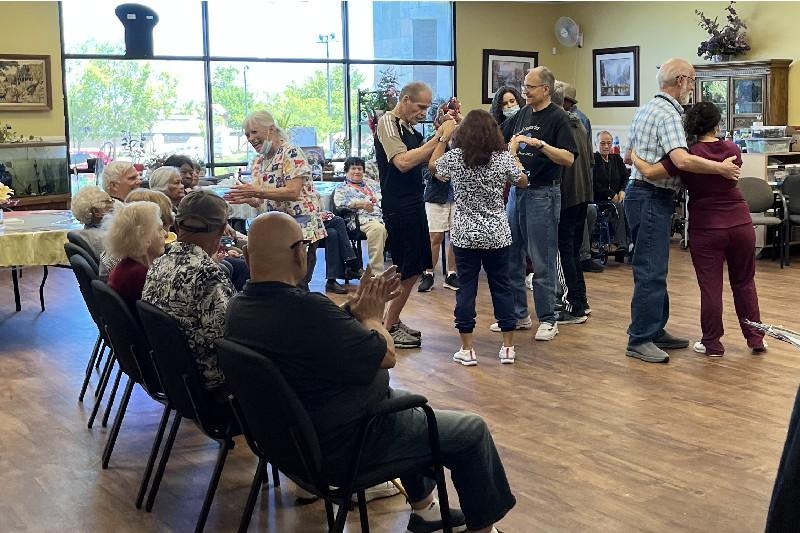
Where to find a senior center in your part of Philadelphia
Use the PCA senior-center finder to search by address or ZIP code and view locations on a map. For city-operated older adult centers and activities, use the City’s older adult programs page and its activity finder. If you want help sorting through food, transportation, benefits, or other needs, call the PCA Helpline at 215-765-9040.
For more Philadelphia-area options, browse The Caregivers Directory’s Senior Services Directory and Philadelphia senior resources guide. Call each center to confirm current programs, eligibility, transportation, and costs.
Frequently asked questions
Are senior centers in Philadelphia free?
Many centers offer no-cost or low-cost services, but policies vary by operator and activity. PCA says donations for eligible lunchtime meals at PCA-funded centers are requested but not required. Trips, supplies, special events, and other activities may have separate fees. Ask the specific center for a current list of costs.
What age do you have to be to attend?
It depends on the program. PCA-funded center meals are available to Philadelphia residents age 60 and older. The City’s Parks & Recreation older adult program serves adults age 55 and older. Ask the location about participation, membership, and guest rules.
Do senior centers provide transportation?
Some programs offer van trips or transportation support, while others help participants find public transit or paratransit. The City says SEPTA ADA Paratransit provides transit to its older adult centers for riders who qualify, with limited PCA funding support. Confirm availability with both the center and SEPTA; transportation is not automatic at every location.
Is SEPTA transportation free for seniors?
Adults age 65 and older can ride SEPTA fixed-route bus, trolley, and Metro services free with a valid Senior Fare Card, and Regional Rail is free for trips between Pennsylvania stations. Shared Ride and ADA Paratransit are separate services with their own eligibility and fares.
Can a caregiver go with the older adult?
Policies vary. Ask whether a caregiver can tour, accompany the person to an activity, eat a meal, or ride on center transportation, and whether any guest charge applies.
Program details, schedules, eligibility, and fees can change. This guide is for general resource navigation, not a guarantee of services. Confirm information directly with each center and transportation provider.