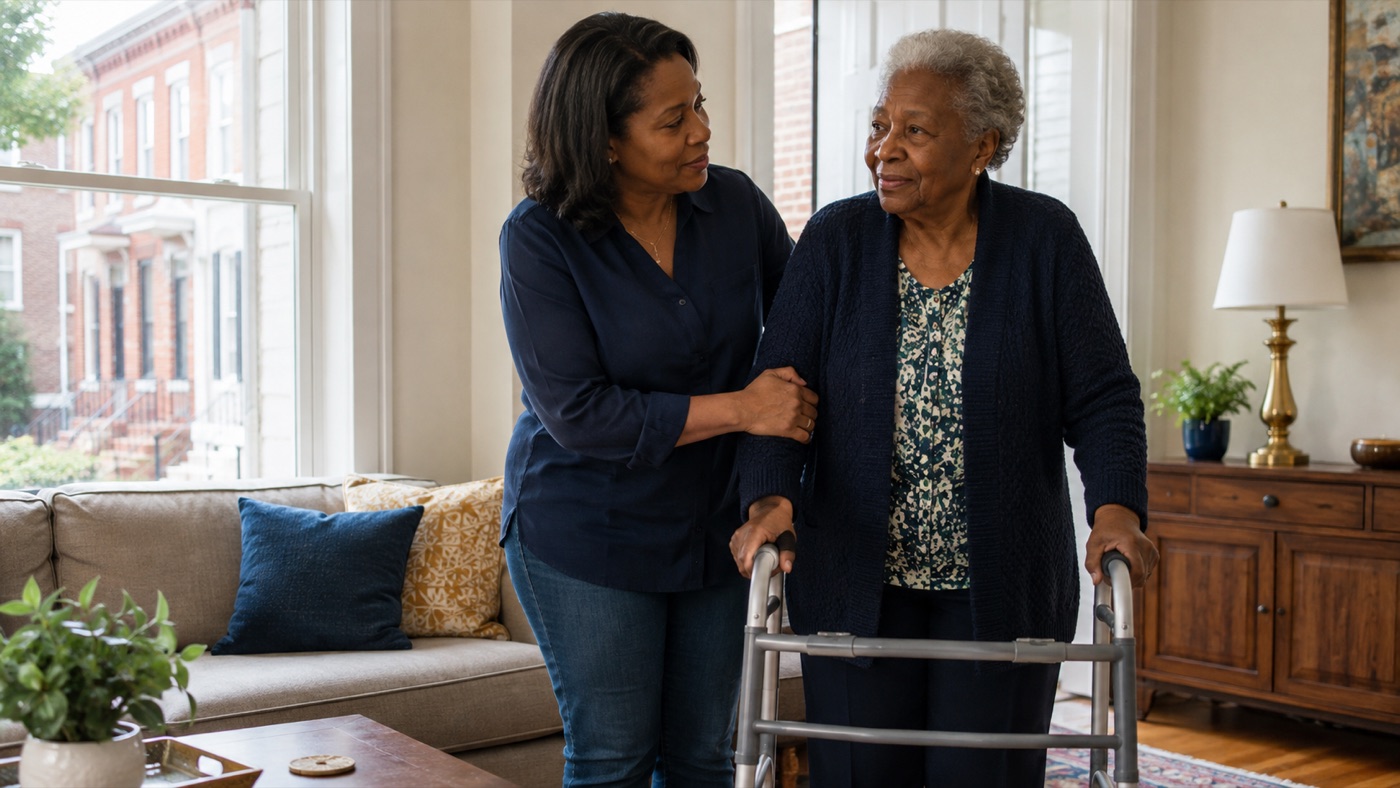

The call almost never comes on a good day. It is usually an adult daughter standing in her mother’s kitchen, looking at a pill organizer nobody filled and three days of mail nobody opened, asking me how things got this far without her noticing. Home care in Philadelphia is usually the right next step for a family in that kitchen. The problem is that most people start calling agencies before they know what they are actually buying, and the first agency with a friendly voice and an opening on Monday gets the job.
I have spent many years on every side of this. Emergency department, ICU, home care, hospice, case management, and four years doing utilization review where my job was designing, implementing, and reading care plans and deciding whether what was written on paper matched what the patient actually needed. I have read a lot of care plans that did not match services performed. So when a family asks me how to pick a home care agency, I do not hand them a list of agencies. I hand them a list of questions.
Quick Answer and Definition of Home Care
For the purposes of this article, Home care in Philadelphia refers to non-medical help at home with bathing, dressing, meals, medication reminders, light housekeeping, and companionship. It is different from home health, which is Skilled Nursing and Therapy ordered by a doctor. But, many times, people use both Home Care and Home Health interchangeably. So, please clarify what the context and services rendered will be.
Before you sign with any agency, ask about their Pennsylvania license, how they screen and train caregivers, who supervises the caregiver, what happens when your regular aide calls out, and exactly what you will owe. Medicare does not pay for non-medical home care.
Community HealthChoices, the OPTIONS program, private pay, long-term care insurance, and VA benefits are the usual funding paths.
If cost is the immediate question, see how much home care costs in Philadelphia and what can change the monthly total.
Home Care and Home Health Are Not the Same Thing
This trips up almost every family I talk to, and it is not their fault. The words sound identical.
Home health is skilled care. A nurse changing a wound dressing. A physical therapist working on stairs after a hip replacement. A speech therapist after a stroke. A doctor orders it, a plan of care gets signed, and it is short-term and intermittent by design. In Pennsylvania, these agencies are licensed under 28 Pa. Code Chapter 601.
Home care is everything else. Help getting into the shower. Someone to cook, do the laundry, remind your father to take his morning pills, and sit with him so he is not alone from 8am to 4pm while you are at work. Pennsylvania licenses these agencies under a completely separate chapter, 28 Pa. Code Chapter 611, through the Department of Health’s Division of Home Health.
Chapter 611 also covers a second model most families have never heard of, and it matters more than anything else on this page.
Clinical note from me: Pennsylvania licenses two different kinds of home care businesses. A home care agency employs the caregiver directly. A home care registry refers you an independent contractor. With a registry, you become the employer in ways families rarely understand at signing, including tax and insurance obligations. State regulation requires them to disclose the caregiver’s employee or contractor status to you in writing before service starts. If nobody handed you that disclosure, ask for it.
Registries are not automatically bad. Some families prefer them and pay less. But you should know which one you signed with, and I have sat with families who found out after something went wrong.
When Home Care in Philadelphia Becomes the Conversation
Nobody wakes up and decides to hire an aide. It builds. In my experience these are the moments families finally pick up the phone:
- A hospital discharge planner says the word “unsafe” out loud
- The same bruise shows up twice, and neither story adds up
- Weight is dropping, and the refrigerator holds condiments and yogurt
- Medications get doubled or skipped entirely
- The primary family caregiver, usually a daughter, stops sleeping
- A fall happens, even a small one, even without an injury
- Bills go unpaid while money sits in the account
One thing I will say directly, because I wish more clinicians did. If you are the family member holding this together and you are running on four hours of sleep and adrenaline, you are already part of the clinical picture. Burnout is not a soft problem. It is the thing that ends the plan.
The Questions I Would Ask First
Print these. Take them to every intake call. An agency worth hiring will answer without hesitating, and the pauses tell you as much as the answers do.
Licensing and Screening
- Are you licensed as a home care agency or a home care registry in Pennsylvania, and what is your license number?
- Do you employ the caregivers directly, or do you refer independent contractors?
- What background checks do you run, and how recently were they run on the caregiver you are sending to my parent?
- Do your direct care workers complete competency testing or approved training?
- Do you carry liability insurance and workers’ compensation, and will you send proof?
- Are you bonded?
- Has your agency had any complaints filed with the Department of Health?
That last one makes people uncomfortable to ask. Ask it anyway. Pennsylvania regulation requires home care agencies and registries to give consumers the Department of Health’s complaint hotline number, 1-866-826-3644, along with the phone number for the Ombudsman Program at the local Area Agency on Aging.
The Caregiver Sitting in Your Parent’s Living Room
- Will my father have the same caregiver every shift, or does it rotate?
- How do you match a caregiver to a client, and what happens if it is not a fit?
- What is your caregiver turnover like?
- Does this caregiver have experience with dementia, oxygen, a Hoyer lift, or whatever my mother actually needs?
- Can we meet the caregiver before the first shift?
- What happens when the regular caregiver calls out sick at 6 am?
The call-out question is the one I care most about. Coverage on paper is easy. Coverage at 6 am on a Sunday in February in Philly is the real product. Ask how many times last month they failed to fill a shift.
Supervision and the Care Plan
- Who supervises the caregiver, and are they a nurse?
- Will someone come to the home to do an assessment before service starts?
- How often is the care plan reviewed and updated?
- How does the caregiver document what happened during the shift, and how do I see it?
- Who do I call at 9 pm on a Saturday, and does a person answer?
- If my mother’s condition changes, what is the process for escalating it?
- Are you willing to coordinate with her home health nurse, her primary care office, or her Community HealthChoices service coordinator?
Money, Before Anything Gets Signed
- What is the hourly rate, and is it different for nights, weekends, and holidays?
- Is there a minimum number of hours per shift or per week?
- Are there assessment fees, setup fees, or cancellation fees?
- How much notice do I have to give to cancel a shift without being charged?
- What is the notice period to end services entirely?
- Do you bill Community HealthChoices, and are you in network with Keystone First CHC, PA Health and Wellness, and UPMC Community HealthChoices?
- Do you accept long term care insurance, and will you bill the carrier directly or do I pay and submit?
Get the answers in writing. A verbal rate quoted on an intake call has a way of becoming a different number on the first invoice.
Who Pays for Home Care in Philadelphia
Medicare
Medicare does not pay for non-medical home care. I need to be blunt about this because families lose weeks assuming otherwise. Medicare covers home health when your loved one is homebound, needs part-time or intermittent skilled nursing or therapy, has a doctor who ordered it and certified the need, and uses a Medicare-certified agency. A home health aide is covered under that benefit only while skilled care is also in place. Medicare does not pay for 24-hour care, homemaker services, meal delivery, or custodial personal care when personal care is the only thing needed.
So when the home health nurse discharges after six weeks, the aide goes with her. That gap catches families every single time, and it is worth planning for on day one rather than day forty.
Medicaid and Community HealthChoices
Community HealthChoices is Pennsylvania’s mandatory Medicaid managed long-term services and supports program for adults 21 and older who need help with daily activities, and for dual eligibles. This is the main path to ongoing paid personal care at home. Philadelphia, Bucks, Montgomery, Delaware, and Chester counties make up the Southeast zone, served by three managed care organizations: Keystone First CHC (the AmeriHealth Caritas plan in the five county region), PA Health and Wellness, and UPMC Community HealthChoices.
Your loved one’s plan assigns a service coordinator who arranges the functional assessment and builds the service plan. Learn that person’s name and direct number. In my utilization review years, I watched approvals move faster for families who had a working relationship with the coordinator and slower for families who only called when something broke.
OPTIONS, Private Pay, and Everything Else
For older adults who need help but do not qualify for Medicaid, Pennsylvania’s OPTIONS program provides in-home services through the local Area Agency on Aging, with a cost-sharing amount based on income.
Private pay is straightforward and expensive. Long term care insurance policies vary widely in what triggers benefits, so read the elimination period and the activities of daily living trigger before you assume anything.
Veterans and surviving spouses should look into VA Aid and Attendance.
Philadelphia and Surrounding County Resources
Philadelphia County
Philadelphia Corporation for Aging Helpline, 215-765-9040, weekdays 8:30 am to 5 pm. PCA handles information and referral, in-home care, home-delivered meals, protective services, and connections to senior community centers. Reports of suspected elder abuse are taken 24/7. Translation services are available.
Bucks County
Bucks County Area Agency on Aging
Montgomery County
Montgomery County Office of Senior Services
Delaware County
Delaware County Office of Services for the Aging (COSA)
Chester County
Chester County Department of Aging Services
Every one of these offices does assessments, and every one of them is the front door to OPTIONS and to Medicaid long-term care screening.
Call your county office before you call a single agency. Families in Bucks and Montgomery counties in particular sometimes find county funded services they had no idea existed.
Red Flags I Would Walk Away From
- The agency will not give you a license number
- Nobody offers to come to the home before service starts
- The rate changes between the phone call and the paperwork
- They pressure you to sign the day of the hospital discharge
- There is no nurse anywhere in the supervision structure
- They discourage you from speaking with the caregiver directly
- An agency employee asks to be added to a bank account, be given power of attorney, or have checks signed over to them
That last one is not a hypothetical. Pennsylvania regulation specifically prohibits home care agencies and registries from taking power of attorney or guardianship over a consumer they serve, or requiring a consumer to endorse checks over to them.
Frequently Asked Questions
Does Medicare pay for home care in Pennsylvania?
Not for non-medical home care. Medicare covers skilled home health for homebound patients who need part time or intermittent nursing or therapy under a doctor’s plan of care. Personal care alone does not qualify.
What is the difference between a home care agency and a home care registry?
An agency employs the caregiver. A registry refers an independent contractor, which shifts tax and insurance responsibilities toward you. Pennsylvania requires this to be disclosed in writing before services begin.
Can a family member be paid to provide home care in Philadelphia?
Under Community HealthChoices, participant-directed service models allow certain family members to be hired and paid as the caregiver. Rules about which relatives qualify differ by program and by plan. Ask the service coordinator directly.
How many hours of home care will my mother get?
Under CHC, hours come from the functional assessment and the service plan, not from what the family requests. If the authorized hours do not match what you see at home, you have appeal rights. Document specific incidents with dates.
How do I check whether a home care agency is licensed in Pennsylvania?
The Department of Health’s Division of Home Health licenses home care agencies and registries. Ask the agency for its license directly, and use the Department complaint hotline at 1-866-826-3644 with concerns.
What if my father refuses to let anyone in the house?
Common, and rarely about the aide. Start with a few hours a week framed around a task he wants done rather than around his needs. Housekeeping and a ride to the pharmacy get accepted far more often than help with bathing.
Related Resources
If your family is coming out of a hospital stay right now, start with what to do when a parent cannot safely go home alone. If you are the one holding everything together, review the signs of caregiver burnout and caregiver support options in Philadelphia. If you are weighing home care against a facility, compare assisted living and nursing homes.
You do not have to figure out home care in Philadelphia in one afternoon. Start with your county Area Agency on Aging, ask the questions above, and write down the answers. Explore The Caregivers Directory to browse home care agencies and caregiver resources across Philadelphia, Bucks, Montgomery, Delaware, and Chester counties.
Stacey Savarese, RN, BSN, BSW, CCM
Medical and Informational Disclaimer
The Caregivers Directory provides general information and resources for educational purposes only. The content on this site, including this article, is not medical, legal, or financial advice and should not be used as a substitute for guidance from a qualified physician, licensed healthcare provider, attorney, or financial professional. If you are experiencing emotional distress or a mental health crisis, contact a qualified professional, or call or text 988 in the United States to reach the Suicide and Crisis Lifeline. Program availability, eligibility requirements, accepted insurance plans, services offered, and areas served may change over time. Always contact providers, agencies, and government programs directly to confirm current details before making care decisions. If you believe your loved one is experiencing a medical emergency, call 911 immediately.